The Argument for Surprise Content
I should first state that “surprise” is not quite the right word here: unscheduled, perhaps, is a better term. This inherently sounds like the weakest argument of all. Live wasn’t really that controversial of an argument in some ways: after all, we have live sports and concerts all the time. Limited sounded more controversial, but the basic model of paying more for more access, quality, or scarcity is also well understood.
What about advertising and promotion? Why would I want to drop a significant work of art without first getting it covered by traditional channels such as TV and magazines and newspapers…oh wait. Think about how the current system of build-up often depends on an existing system that is fading. And yes, you can promote your act on social media as well. But you could also link to that surprise content on social media and let your army of fans retweet and repost your announcement for you, creating an organic surge behind your product. And if you’ve already embraced the live and limited perspective, you’re now in the business of creating Content Stampedes, where your fans race not to be left out. (I realized I hadn’t made up any Internet buzzwords to promote this series, how shameful of me).
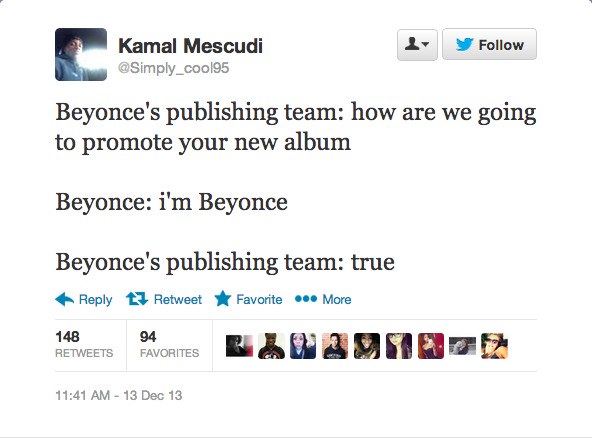
I’m thinking of music again, and how artists now often dump content on Soundcloud. But it’s not just done by unknowns in dorm rooms: think of Beyonce’s surprise album with no warning in 2013, still seen as one of her best. Social media is energized by surprises, and you can easily argue it was more impressive than a traditional release cycle. Even the latest Taylor Swift release has had elements of surprise as to when different parts of the new album would be released.
Today’s customer is jaded. They’ve seen and heard it all. They like to anticipate content and then disparage it. Writing this as the Joker movie has been released, it feels like much of the public was already worn out by various Joker-based debates before the movie was even released to the public. We see this even in politics, to some extent, where being a front-runner makes you more a target than before. (Some research shows that being a front-runner is worse than ever for your chances of winning). That’s not to say that launching unexpectedly protects the producer from such treatment, but only to point out that the long lead-up (as opposed to Netflix’s sudden posting of content at times) may not always help.
And note, I’m not saying everything needs to be a complete surprise. Sports will never quite be on a surprise schedule, although I note that pro wrestling has largely succeeded due to surprise matchups and guests. But overall, FOMO culture is best triggered when missing out is a very real possibility. There’s a different feel to your fandom if your favorite video game player livestreamed unexpectedly rather than on a M W F schedule. I separate myself as a fan if I was there and caught that performance: I thus become hooked on the surprise aspect of this content.
Surprise isn’t just about timing. By having limited audiences and live performances, content providers can also be more surprising in their shows. I’ve tried to avoid discussing how Live, Limited, and Surprise work together, but hopefully now you’re already starting to think of how the three build on each other. Limited and Live allows for micro-targeting, allowing the content provider to customize their content based on which fans are attending which shows. As an example, consider how musicians often release something offbeat to Soundcloud or more obscure channels, creating quirky content that surprises and delights hardcore fans. I think as well of Grateful Dead and Phish fan culture, where obsessed fans relish the oddities and surprises in taped performances the most.
This blog series is a rough draft in many ways. It lacks diagrams and a firm connection between the different pieces. For example, it can be argued that Live is positively correlated with Surprise but negatively correlated with Limited. You can also argue to what extent this should be about Interactivity, Variety, Customization, and Micro-transactions, rather than about LLS. But I wrote it in many ways for the feedback and thoughts it would inspire. I think we’re increasingly at a stagnation point with our current content delivery styles and models, and that some different models will dominate the next decade. Thus, I’d rather post a blog like this too soon, rather than too late.
The question is how big of a platform does someone need for anyone to care about their surprises. I do think it requires a skilled creator with some improv skills as opposed to being carefully scripted: different than planning out a social media campaign for National Pancake Day or something in advance.